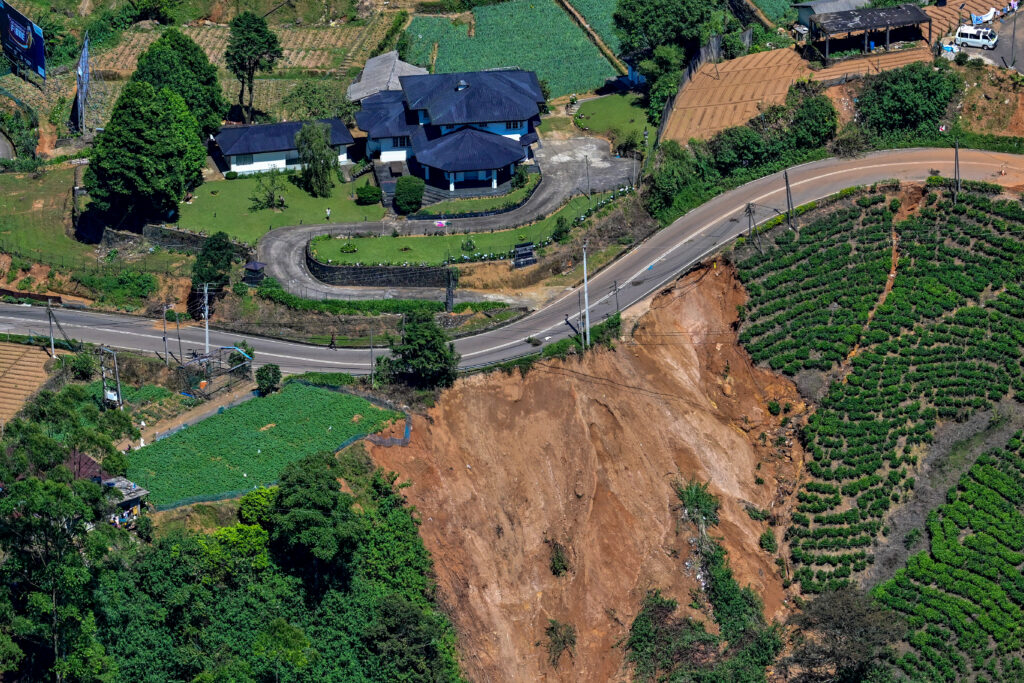
In the mist-draped mountains of Sri Lanka’s tea country, rescuers were still plucking bodies from the reddish-brown mud on Tuesday after last week’s cyclone, the island’s worst natural disaster in decades.At least 465 people were killed, according to disaster officials, with another 366 missing.Sri Lanka’s Air Force has been combing the landslide-struck landscape, surveying the damage and ferrying food and other essential supplies to marooned residents.Though the rain has stopped, recovery has just begun.As the first journalist for foreign media to join a relief mission over the tea-growing region, AFP photographer Ishara Kodikara saw a swathe of the country destroyed after slips of soil flattened everything in their paths, including roads and the vehicles that were on them.The roof of some houses peaked through the mud, while the rest of the buildings were swallowed by the torrents of soil unleashed by Cyclone Ditwah.Jagged tears in the mountainsides revealed churned-up expanses of earth, with a few patches of the lush vegetation still clinging nearby in stark contrast. There was no sign of human life in the wrecked landscape.In the central Welimada area, now inaccessible to heavy vehicles, rescue workers pulled 11 bodies from the mud on Monday and appealed for help to search for dozens more.In some places, entire slopes have been sheared away, leaving ochre wounds slicing through the dense plantation greenery.- Swallowed by landslides -The full extent of the damage to tea plantations, factories and tea pickers is not yet clear, but local media reported the industry has been hard hit.What were once thick, unbroken canopies of tea are now wide channels of mud and debris.The main roadway has been swallowed by landslides, buried under heaps of mud, rock and uprooted vegetation. Only a few stray pieces of tarmac remain, suggesting where the road once was.The authorities say they have given top priority to reopening road access to the region, which is still supplied by air.Helicopters from neighbouring India and Pakistan have also been deployed to evacuate tourists and the sick.On the relief mission AFP attended on Tuesday, the VVIP Bell-412 aircraft had its seats removed to make room for food and other essential supplies.It ferried water and dry rations to stranded residents of Nuwara Eliya, in the heart of the tea country and 100 kilometres (60 miles) east of Colombo.Rescuers expect the death toll to rise as they regain access to areas that had been cut off from electricity and telephones for days.The disaster is already the deadliest since the Boxing Day earthquake and tsunami of 2004, which devastated Sri Lanka’s coastline.This time, the entire country has been affected either by landslides or floods.President Anura Kumara Dissanayake has declared a state of emergency, and appealed for international assistance.
In the mist-draped mountains of Sri Lanka’s tea country, rescuers were still plucking bodies from the reddish-brown mud on Tuesday after last week’s cyclone, the island’s worst natural disaster in decades.At least 465 people were killed, according to disaster officials, with another 366 missing.Sri Lanka’s Air Force has been combing the landslide-struck landscape, surveying the damage and ferrying food and other essential supplies to marooned residents.Though the rain has stopped, recovery has just begun.As the first journalist for foreign media to join a relief mission over the tea-growing region, AFP photographer Ishara Kodikara saw a swathe of the country destroyed after slips of soil flattened everything in their paths, including roads and the vehicles that were on them.The roof of some houses peaked through the mud, while the rest of the buildings were swallowed by the torrents of soil unleashed by Cyclone Ditwah.Jagged tears in the mountainsides revealed churned-up expanses of earth, with a few patches of the lush vegetation still clinging nearby in stark contrast. There was no sign of human life in the wrecked landscape.In the central Welimada area, now inaccessible to heavy vehicles, rescue workers pulled 11 bodies from the mud on Monday and appealed for help to search for dozens more.In some places, entire slopes have been sheared away, leaving ochre wounds slicing through the dense plantation greenery.- Swallowed by landslides -The full extent of the damage to tea plantations, factories and tea pickers is not yet clear, but local media reported the industry has been hard hit.What were once thick, unbroken canopies of tea are now wide channels of mud and debris.The main roadway has been swallowed by landslides, buried under heaps of mud, rock and uprooted vegetation. Only a few stray pieces of tarmac remain, suggesting where the road once was.The authorities say they have given top priority to reopening road access to the region, which is still supplied by air.Helicopters from neighbouring India and Pakistan have also been deployed to evacuate tourists and the sick.On the relief mission AFP attended on Tuesday, the VVIP Bell-412 aircraft had its seats removed to make room for food and other essential supplies.It ferried water and dry rations to stranded residents of Nuwara Eliya, in the heart of the tea country and 100 kilometres (60 miles) east of Colombo.Rescuers expect the death toll to rise as they regain access to areas that had been cut off from electricity and telephones for days.The disaster is already the deadliest since the Boxing Day earthquake and tsunami of 2004, which devastated Sri Lanka’s coastline.This time, the entire country has been affected either by landslides or floods.President Anura Kumara Dissanayake has declared a state of emergency, and appealed for international assistance.